Don’t do it. Don’t! The boy hesitates, then fires. A yellow, plastic pellet ricochets off the author’s chest and rings against a whiskey glass as the author makes a violent lunge for the boy -- who evades him and dashes off. The author looks at a note-card and rambles a bit, searching for his place: AUTHOR Over your lifetime. I can’t tell you how many times. Somebody comes up to me.
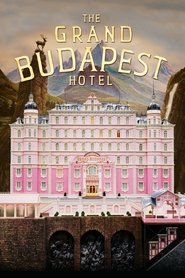
The Grand Budapest Hotel (2014)
AUTHOR
A screenplay character in The Grand Budapest Hotel (2014).
- lines
- 6
- words
- 1,001
- scenes
- 2
- dialogue
- 7.1%
- avg words / line
- 167
- shortest / longest
- 32 / 270
source review flagged 1 dialogue line
Sample dialogue
To him who has often told the tales of others, many tales will be told. The boy returns, the gun now tucked under his belt, and sits, immediately comfortable, on the author’s lap with the old man’s arms wrapped around his shoulders. The conflict seems never to have existed. They both look into the camera as the author concludes: AUTHOR The incidents that follow were described to me exactly as I present them here, and in a wholly unexpected way. EXT. MOUNTAIN RANGE. DAY The late sixties. A stunning view from a rusty, iron- lattice terrace suspended over a deep crevasse, green and lush, alongside a high cascade. The author continues in voice-over as the camera glides along a cracked path through a plot of untamed edelweiss and buttercups: AUTHOR (V.O.) A number of years ago, while suffering from a mild case of “Scribe’s Fever” (a form of neurasthenia common among the intelligentsia of that time) I had decided to spend the month of August in the spa town of Nebelsbad below the Alpine Sudetenwaltz -- and had taken up rooms in the Grand Budapest -- The camera comes to a stop as it reveals a sprawling nineteenth-century hotel and baths situated on a wide plateau. There is a deep, formidable staircase up to a regal entrance. There is a promenade above and a glass- panelled conservatory below. A rickety funicular groans as it slowly climbs its hillside tracks. The grass needs cutting, the roof needs patching, and more or less every surface of the building needs a coat of paint.
scene 3 — INT. STUDY. DAYOn the wall behind M. Jean, there is a beautiful, Flemish painting of a pale, young boy holding a piece of golden fruit. This is “Boy with Apple”. A patch of water-
scene 3 — INT. STUDY. DAY-- a picturesque, elaborate, and once widely-celebrated establishment. I expect some of you will know it. It was off- season and, by that time, decidedly out- of-fashion; and it had already begun its descent into shabbiness and eventual demolition. MONTAGE: The nine other guests of the hotel each observed from a respectful distance: a frail student; a fat businessman; a burly hiker with a St. Bernard; a schoolteacher with her hair in a bun; a doctor; a lawyer; an actor; and so on. AUTHOR (V.O.) What few guests we were had quickly come to recognize one another by sight as the only living souls residing in the vast establishment -- although I do not believe any acquaintance among our number had proceeded beyond the polite nods we exchanged as we passed in the Palm Court and the Arabian Baths and onboard the Colonnade Funicular. We were a very reserved group, it seemed -- and, without exception, solitary. CUT TO: An enormous, half-abandoned dining room. There are two hundred tables and fifty chandeliers. The ten guests sit, each on his or her own, at their separate tables, widely-spaced across the giant restaurant. A waiter carries a tray a great distance to the schoolteacher and serves her a plate of peas. INT. LOBBY. EVENING There are faded couches, fraying armchairs, and coffee tables with new, plastic tops. The carpets are threadbare, and the lighting in each area is either too dim or too bright. A concierge with a crooked nose smokes a cigarette as he lingers behind his desk. He is M. Jean.
scene 3 — INT. STUDY. DAYIt was an enchanting, old ruin -- but I never managed to see it again. The light goes out. CUT TO: The lobby. The author sits alone in an armchair in the deserted room writing in a small note-book. CUT TO: The study. The author (at seventy-five) sits in an armchair writing in an identical small note-book. The six-year-old boy plays with an army of metal soldiers on the floor beside him. CUT TO: The park. The girl in the trench coat and beret sits on a bench near the statue of the author. She is just finishing the final chapter of: THE GRAND BUDAPEST HOTEL
scene 49 — EXT. HOTEL. NIGHTDon’t do it. Don’t! The boy hesitates, then fires. A yellow, plastic pellet ricochets off the author’s chest and rings against a whiskey glass as the author makes a violent lunge for the boy -- who evades him and dashes off. The author looks at a note-card and rambles a bit, searching for his place: AUTHOR Over your lifetime. I can’t tell you how many times. Somebody comes up to me.
scene 3 — INT. STUDY. DAY
First and last lines
It was an enchanting, old ruin -- but I never managed to see it again. The light goes out. CUT TO: The lobby. The author sits alone in an armchair in the deserted room writing in a small note-book. CUT TO: The study. The author (at seventy-five) sits in an armchair writing in an identical small note-book. The six-year-old boy plays with an army of metal soldiers on the floor beside him. CUT TO: The park. The girl in the trench coat and beret sits on a bench near the statue of the author. She is just finishing the final chapter of: THE GRAND BUDAPEST HOTEL